
Harvesting the Past. Driving the Future.
With six generations behind them and a seventh already getting involved, Tyler Herrs and his family are building on their Kansas farming legacy with MacDon harvesting performance.
Six generations ago, Tyler Herrs’s great-great-great-grandfather made his way to America from Germany and started a farm in north-central Kansas.
Now, there’s no knowing whether he anticipated, more than 150 years later, that same farm would not only be active but thriving, with his descendants still at the wheel, but the long lineage on the land is certainly a point of pride for this iteration of his family.
“We're on the sixth generation, or I'm the sixth generation, my cousins are the sixth generation, and the seventh generation is now on the ground and come out when they can,” says Tyler.
“Dad and uncle are both still involved in the day-to-day…They very much have a big influence on what goes on yet on the farm, so they're starting to turn a little bit more over to us boys, but yeah they're still very involved.”
Tyler’s grandfather was the one who really got things going on the farm; Tyler explains that after his grandfather left school, he was big in the hog business, and while that isn’t a part of their business now (though they do have some cattle), at the time it helped create a product-diversity mindset that is still used today.
As a kid, Tyler remembers hauling bales as young as nine or ten, tagging along with his dad, grandfather, and uncle to complete farm duties “as soon as we could pretty much crawl.”
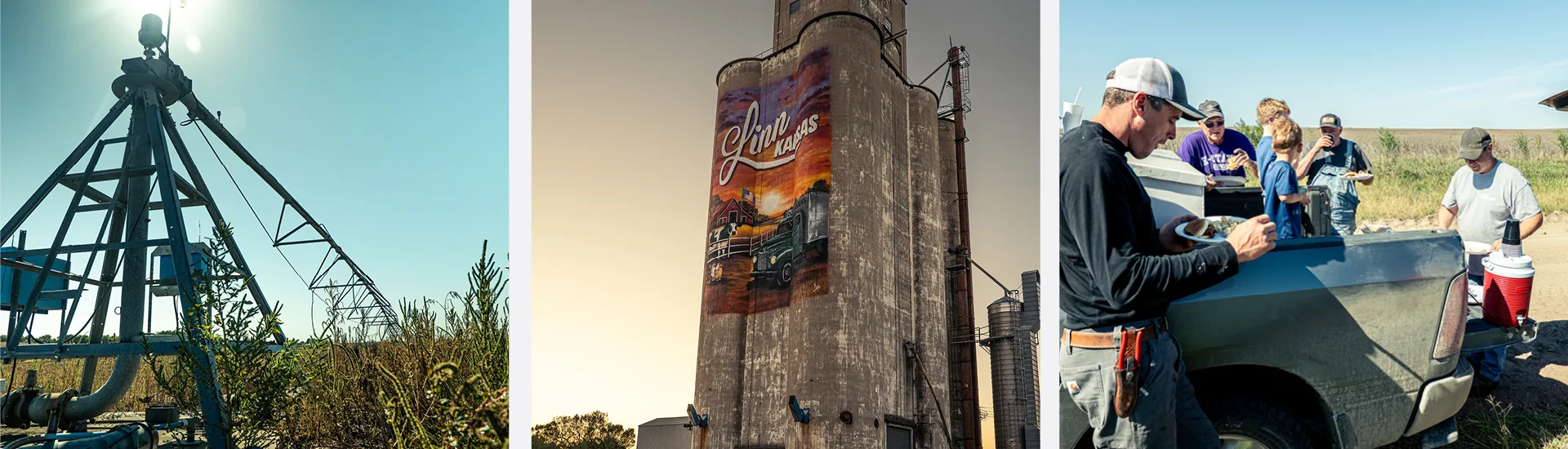
“We've been pretty much involved in it since day one, and it seems like the next generation is kind of following the same suit as well. The kids come out any time they can, and when they're not in school or when my mom or aunt bring out lunches, they're always tagging along.”
“We've been pretty much involved in it since day one, and it seems like the next generation is kind of following the same suit as well.”
The Herrs family, including Tyler, his dad, his uncle, and his two older cousins, farms 5,000 acres of corn and soybeans, primarily in Washington County, Kansas. The area is known for its rolling terrain and numerous terraces. In fact, Tyler doesn’t think there’s a single flat patch of ground on any of the acres they farm.
In addition to that potentially tricky terrain, the Herrs deal with very hot, very dry weather throughout much of the summer.
“I think we typically get upper 20s, low 30s inches of rain per year. So, I mean, it can get pretty hot and dry in the summer times. Last few years, though, we've been pretty fortunate. We've had good rains and good weather that have allowed us to raise some pretty good corn and soybean crops the last few years,” says Tyler.
“The biggest challenge is just not knowing when that next rain is gonna come all the time. And if it gets hot and dry in July, in August, that sometimes can short a corn crop in July or a bean crop in August. Fortunately, we have a pivot, we have several irrigated acres that we've been trying to put more of that into in recent years where we can, just to kind of help us get through those dry spells and kind of manage that risk a little bit. But I definitely would say weather is probably the toughest challenge we face.”
And with something as unpredictable as the weather to contend with, the Herrs are grateful to have equipment they know they can rely on, regardless of what Mother Nature throws their way, including their MacDon FlexDrapers and C-Series corn heads.
The Herrs purchased their first MacDon header 15 years ago when they updated their combine and bought a 35-foot FD70 FlexDraper® header. They added a second FD70 and ran them both up until two years ago when they upgraded to two FD240s, which offer more capacity, faster cutting speeds, and 8-inch wider side draper belts for smoother, higher-volume crop flow.
Last year was the first time they ran the FD240s in the field, and they immediately fell in love with how well the flex technology handles their many terraces.
“We had heard how well they flex going over our rolling terrain and terraces that we have. We have auto-steer on both combines now, and we wanted to get to a point where we could cut straight back and forth as often as we could. I mean, there's a few fields where it just lays really rough that sometimes we'll have to cut terraces out, but for the most part, we're able to go up and over terraces pretty well with them FD240s, with how well they flex. We had very good luck with them, and love how well they work in our geography,” says Tyler.
“We're able to go up and over terraces pretty well with them FD240s, with how well they flex.”
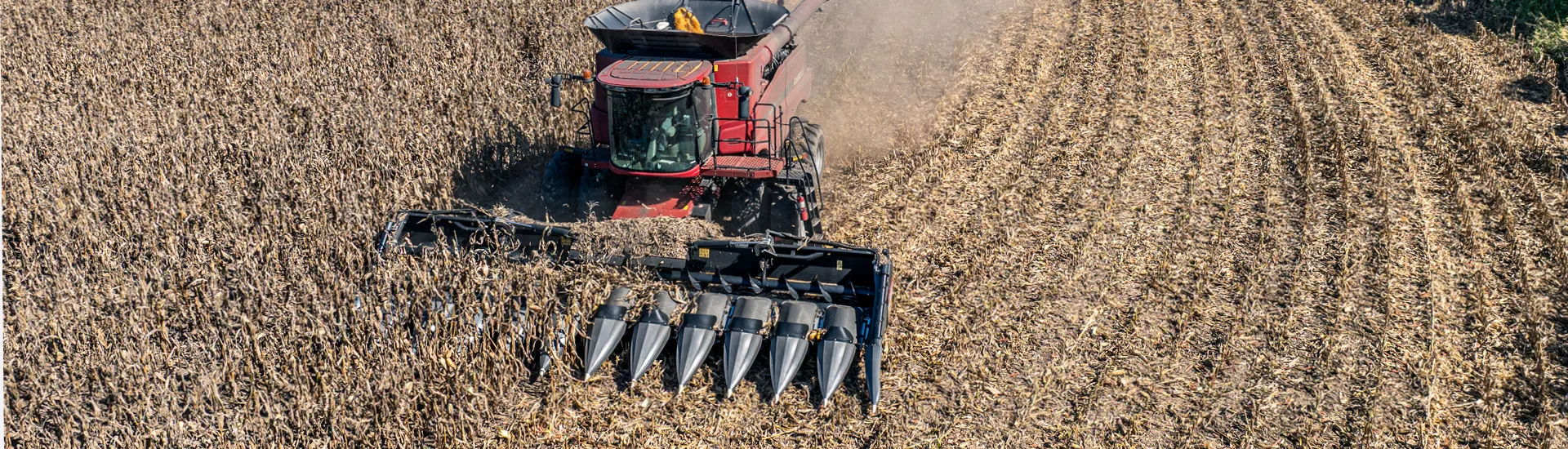
This season, the Herrs are also running a couple of MacDon’s C Series corn headers, specifically the C3012 folding corn heads. Already they’ve been impressed with the performance and low maintenance of the headers, and look forward to using them for many seasons to come.
“With former headers, we would have issues, especially when the corn got really dry. We would have issues with the corn backing up and not feeding very well. And so far this year, running these things, these two MacDon heads, we've had no issue with that so far. It's getting pretty dry, so it's good to see that,” explains Tyler, adding they were given the opportunity to demo a 12-row flex corn header when they indicated to their dealer they might be interested in upgrading from a different brand.
“With former headers, we would have issues with the corn backing up and not feeding very well. Running these two MacDon heads, we've had no issue with that so far. It's getting pretty dry, so it's good to see that.”
“We were interested in updating our corn heads to something a little newer. They brought that flex 12 row out for us to try, and after trying it, I mean, we really, really liked how it works, so we kind of just decided when it comes time to get different corn heads, we thought we would go this route. And when we were pricing the different brands, I mean, price-wise it was hard to beat. So we pulled the trigger and we've been really happy.”
Ultimately, though, Tyler and his family decided MacDon’s C3012 folding corn header, rather than the MacDon FlexCorn™ header, would be the best investment for them, so that’s what they went with.
“We had demoed that FlexCorn™ head, 12-row flex, which I really liked too, but we kind of thought for where we are, I mean, yes, we do have lots of terraces and rolling terrain, but for the most part with a 12-row head, we don't have any issue getting underneath the ears. And since we've gotten 12-row corn heads, we've kind of selected hybrids that have higher ear placement to manage that better. We thought using the folding corn head would be a little better fit for us, just not having to drag around header trailers and things like that. We've harvested about a thousand acres so far, and it's gonna be hard having to drop heads when we get into beans again. It'll be hard to ever go back to a rigid head, that's for sure,” he says.
Released in 2018, the C3012 corn header features a 12-row, 30-inch configuration and can fold, allowing exceptionally easy field-to-field travel during harvest. In addition, the C Series headers punch above their weight in terms of residue management thanks to the innovative OctiRoll™ Residue Management System, which creates well-conditioned and evenly distributed residue in just one pass. This is one of the features Tyler is intrigued by most.
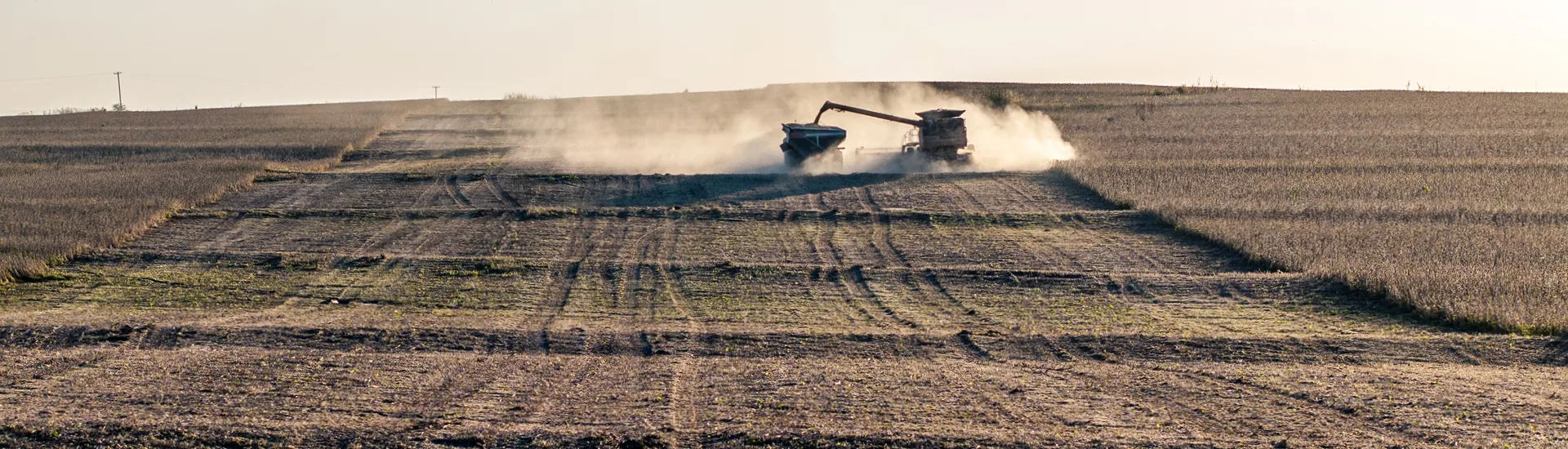
“I really like the job it does. I mean, you look across the field and other corn heads we've run, it just doesn't look as clean. It's a nice clean cut finish, and that OctiRoll™, I'm really curious to see how that helps with stalk degradation and residue breakdown this winter because just looking at the finish when you walk out across the field after the combine rolls through, it does a nice job of crimping up that residue and it'd be very interesting to see how that does this year,” Tyler explains.
“I'm really curious to see how that helps with stalk degradation and residue breakdown this winter, because just looking at the finish when you walk out across the field after the combine rolls through.”
“These last few years, we've been very fortunate with raising good corn crops. We leave so much residue, and we fight it in the spring if we're going into beans or any crop, what's coming after the corn. So I'm really excited to see how this does. It looks a lot better anyways this fall, so I guess we'll see what it looks like come spring.”
As happy MacDon customers for more than 15 years, Tyler and the Herrs family don't hesitate to recommend the products to other farmers interested in a flex draper or corn head demo.
“I'd say give it a try. I mean, we went in with no experience with them. Like I said, it started out with a demo, but we really like it. Definitely look at it and give it a try if you can. We've been very happy with it,” says Tyler.
“I think you got a good product and I really enjoy using it.”
RELEVANT LINKS
Visit our product pages to learn more:
C Series Corn Header
FD2 Series FlexDraper® Header
Additional Resources:
MacDon Performance Parts
Owners Resources
How To Video Library
MacDon Dealer Locator
Andere Geschichten

MacDon How To - C Series Corn Header - Combine Auto Header Height Calibration
Quinn walks you through how to calibrate your C Series Corn Header Auto Header Height Control system on a New Holland Combine. This process also applies to FC Series FlexCorn™ Headers.
MacDon Performance Stories - All for One!
When Dave Franciosy and Markus Trost dreamed of bringing the full lineup of MacDon FD2 FlexDraper® Headers together on seven different combines, their strong relationships with farmers and dealers made the impossible possible.
Essential Maintenance for Winter Storage
As winter approaches, preparing your harvest machines for storage is vital to prevent rust, seized parts, and costly repairs.
Don't Miss Out!
Get MacDon news, offers, product announcements, and more directly to your inbox.